Why her and not us?
The dogma of the Immaculate Conception
The dogma of the Immaculate Conception
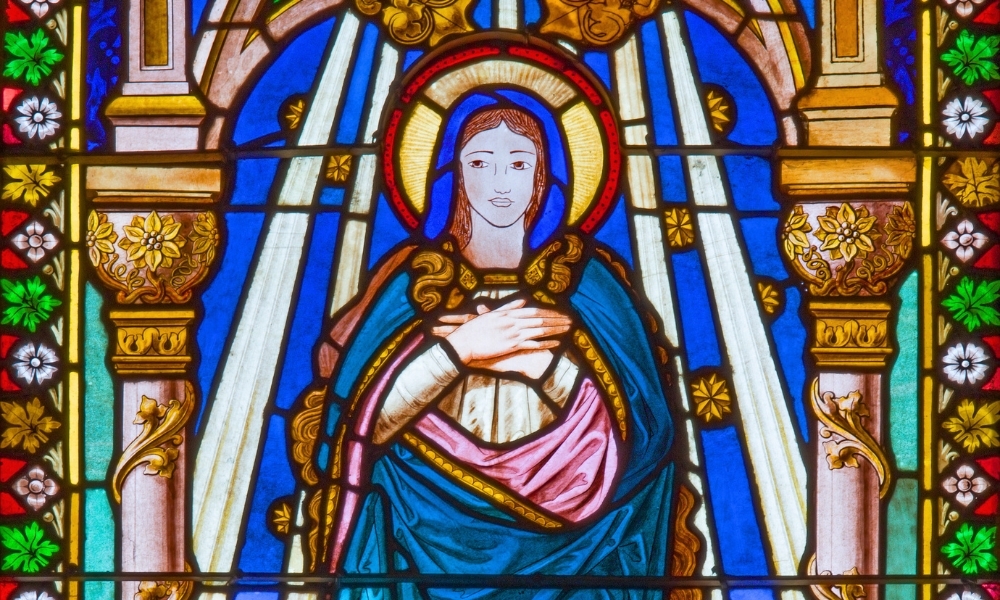
Before we begin, a quick summary of the dogma of the Immaculate Conception seems necessary. First, it affirms that Mary, from the moment she was conceived in her mother's womb, was preserved from the stain of original sin. This is due to the merits of the passion, death and resurrection of her son, Jesus.
Before we begin, a quick summary of the dogma of the Immaculate Conception seems necessary. First, it affirms that Mary, from the moment she was conceived in her mother's womb, was preserved from the stain of original sin. This is due to the merits of the passion, death and resurrection of her son, Jesus.
Second, the sacrifice of Christ, who came to save us all — including those who came before and after him — is so powerful that it was effective in Mary before she was born, from the very beginning of her existence. In fact, her immaculate conception arises from the sacrifice of Christ even before he was born. In our case, we begin to receive this grace at the moment of our baptism.
A very valid question then, is that if God could preserve Mary from the stain of original sin and its consequences, why doesn’t he grant the same immaculate grace to other human beings? Why not us? The answer lies in the role that God prepared for Mary.
In the Book of Genesis, we read of an angel who appears to the woman Eve and convinces her to succumb to temptation; this action brought condemnation on all humanity. God did not want to leave us adrift in sin, so he sent another angel to another woman. The crucial difference is that Mary’s response allowed for the salvation of all humankind. Mary’s task was to be the new Eve. Therefore, like Eve, she was created without original sin.
Both women were given the same freedom. Both could have succumbed to temptation, or conversely, remained in a state of grace. So, let’s turn this principle on its head: Eve, like Mary, was created without original sin, and in her freedom, she chose evil. Therefore, it is in God’s perfect wisdom that a woman who had the capacity to choose good should be in the same state of grace and freedom as the first.
However, the question remains: why doesn’t God create us all like those two women? The answer lies in the unique and unrepeatable vocation of each human being. Eve’s vocation was to safeguard the fruit of good and evil, and we know how that story ended. Mary’s vocation was to safeguard the fruit of salvation. We also know that neverending “ending.” When the angel Gabriel announced God’s plan to Mary, she could have refused. Instead, she said, “May it be done to me according to your word” (Lk 1:38).
This dogma teaches us a profound truth. God endows and equips us for the task to which he calls us. He will always provide us with what is necessary for the vocation to which we were created. Mary came to repair the damage Eve had done: one believed while the other doubted; one obeyed while the other rebelled; one said “yes” while the other turned her back and left paradise.
The Solemnity of the Immaculate Conception (Dec. 8) invites us to trust that we are made for any calling, any task, we receive from God, and especially for our vocation. God created us with everything necessary to carry out his will. Why didn’t God make you and me immaculate? One possible answer is because that grace wasn’t necessary for our vocation. And, in our same freedom, we are to choose him and his will.
Just as God entrusted vocations to Mary and Eve, so he entrusted tasks to each of us. But how can we know what our calling and mission are? “What is my vocation?” An indispensable tool for finding this answer is time. Are we making the most of it or wasting it? The issue lies in whether we are absorbed by the distractions presented to us by the enemy, the world, our own flesh, or whether we are attentive to the presence of God.
What was Eve doing when the angel of temptation, now humanity’s eternal enemy, appeared to her? She was in paradise, a place where she enjoyed the presence of God, but turned from it. What was Mary doing when the Archangel Gabriel appeared to her? She was praying, a moment in which she, you and I are in the presence of God. If we want to know our mission or our vocation, we must remember that prayer is the key to encountering God and knowing his will.
Holy Mary Immaculate, conceived without sin, pray for us!
Cristina Umaña Sullivan is a cultural sociologist who has been dedicated to evangelization for more than 10 years with a specialty in Theology of the Body and identity creation from a Christian perspective. Email her at fitnessemotional@gmail.com.