Hope, prayers and faith: Our pope's diagnosis and what comes next
"Heavenly Father, I thank you for loving me. I thank you for sending your Son, Our Lord Jesus Christ, to the world to save and to set me free. I trust in your power and grace that sustain and restore me." — Healing prayer attributed to St. Padre Pio
"Heavenly Father, I thank you for loving me. I thank you for sending your Son, Our Lord Jesus Christ, to the world to save and to set me free. I trust in your power and grace that sustain and restore me." — Healing prayer attributed to St. Padre Pio
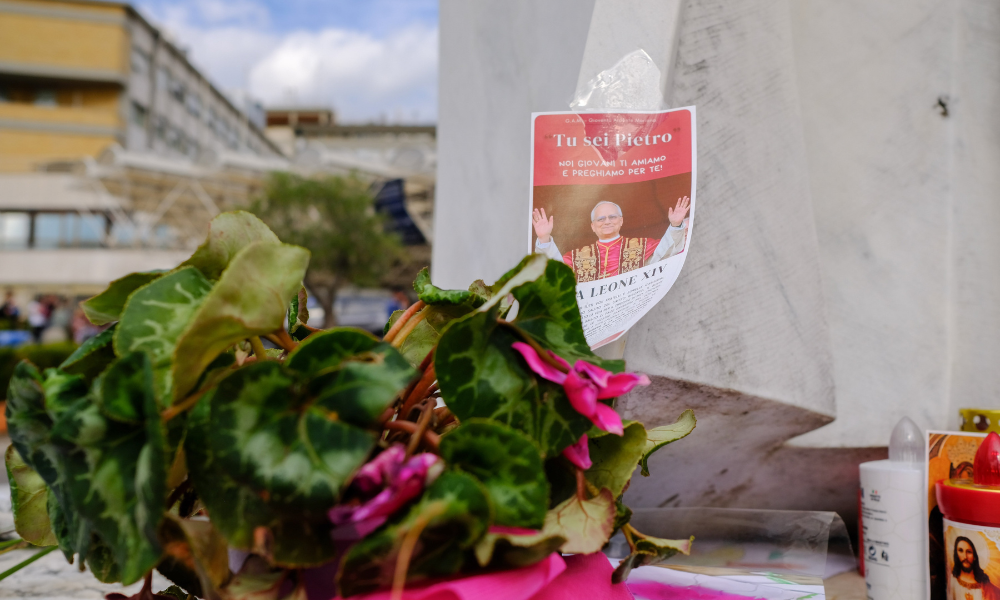
How quickly things change. In just 72 hours, the tremendous joy and pride that I have felt — that we have all felt — since Chicago native Robert Prevost became Pope Leo XIV have all but vanished.
We are now contemplating an unknown future for our first American-born pope after learning he has had surgery for lung cancer. Like everyone else here at home, in Rome and throughout religious life, I felt shock, sorrow and — yes — fear.
The prayer that opens this column is too long to run in full, so I have used only a brief excerpt or two. But it reflects what we are all experiencing now, and for me it hits especially close to home. I survived kidney failure twice between 2016, when I began dialysis, and November 2019, when God granted me a miracle after just 18 days on a second hospital's waiting list.
The doctors and specialists all considered the first recovery of my kidneys a miracle — it happens so rarely — and my remission lasted a full year. Now we must pray that the same blessing comes to our first American pontiff.
The Vatican announced the pope's diagnosis as lung adenocarcinoma, one of the many forms of lung cancer. According to PBS NewsHour, lung cancer falls into two main groups: small cell and non-small cell. Non-small cell lung cancer accounts for most cases worldwide, and adenocarcinoma is its most common subtype.
After imaging revealed a nodule, doctors removed the lower lobe of his right lung, and the tissue was diagnosed as adenocarcinoma. His Holiness is 71. I turned 73 this past April and carry a "cadaver" organ, a kidney from a deceased donor. I do not worry or even think about "living on borrowed time," and I would like to believe that neither does he.
FAMILY HISTORY
My aunt Joan Goines, 78, of Detroit, died Aug. 30. Two weeks earlier, she had asked to be taken off dialysis, wanting to end years of hospital visits, cardiac alerts and simply being sick.
My sister Norma Jean said that in her final days, Joan "could not open her eyes to see us, but did respond to our voices by squeezing our hands."
Her youngest son, Patrick, also chose to end treatment several years ago, weary of repeated amputations caused by his fight against diabetes.
Our family has been a "poster child," if you will, for diabetes, heart disease and kidney failure, the last most likely passed on to me.
Similarly, Pope Leo XIV, a lifelong nonsmoker, comes from a family with a history of cancer. His brother Louis Prevost has revealed that he is battling multiple myeloma, a blood cancer, and both of their parents died of cancer: their mother, Mildred, in 1990 and their father, Louis, in 1997.
The question now, for us the faithful and indeed for all of us, is: Where do we go from here?
"Touch also my mind and my emotion, even the deepest recesses of my heart." — St. Padre Pio
Hopefully, anywhere but down that long, dark road of depression and defeatism. I kept my kidney disease at bay for two years and 10 months after my diagnosis. Once I began dialysis, it meant three treatment sessions a week, each lasting 3½ hours.
That is standard for most end-stage renal patients, although many who have multiple health issues may need up to four hours. I told jokes — very bad ones, at that — with a dry, straight-faced delivery and punchlines that tempted my nurses to contemplate homicide.
After my transplant, a visiting chaplain told me, "You did a lot of good while you were here, because you lifted a great many spirits."
Likewise, our own spirits have been lifted by the sight of the Holy Father leaving Rome's Gemelli hospital just four days after his surgery. Even better, his personal physician and surgeon, Dr. Stefano Margaritora, told the Vatican there is no reason for the pope to cancel his planned November trip to South America, CBS News reported.
At the same time, neither his doctors nor the Vatican has shared a prognosis.
WHAT THE FUTURE HOLDS
As with any cancer patient, there will likely be treatment to slow the disease's progression, along with blood draws (lab work) to monitor our pontiff's overall health. But unlike for kidney patients, a transplant is almost certainly off the table.
Kidney recipients can receive a "new" organ, whether from a deceased donor or a living volunteer "match." Lung transplants are far rarer and more difficult, and Pope Leo's age weighs against one.
Hard truths, to be sure. But next month I will have lived with my transplanted kidney for seven years. In essence, I have "been there, done that" and have become a resource for others starting out on their own long journey.
Only God knows how Pope Leo XIV's journey — or mine — will end. I have another appointment with my nephrologist this week. The uncertainty and anxiety never end. Never.
So, please pray for the pope, and in your charity, maybe spare a prayer for me, too.
Robert Alan Glover is an alumnus of the University of Dayton, where he earned a bachelor's degree in social work. Kidney and transplant patients are welcome to contact him at martinique1902@yahoo.com.