He gave of himself — literally
NATIONAL DONATE LIFE MONTH
NATIONAL DONATE LIFE MONTH
"It was the best of times, it was the worst of times," is the first line from British author Charles Dickens' 1859 novel, A Tale of Two Cities, about how one circumstance can change the path and fate of many different lives.
"It was the best of times, it was the worst of times," is the first line from British author Charles Dickens' 1859 novel, A Tale of Two Cities, about how one circumstance can change the path and fate of many different lives.
For John Grady Dickson, now deceased, the worst of times came with a diagnosis of polycystic kidney disease in the late 1990s.
For me, it was a phone call from my family practitioner in 2013 saying that "I need to see you about the results of your labs from the other day in my office, TODAY."
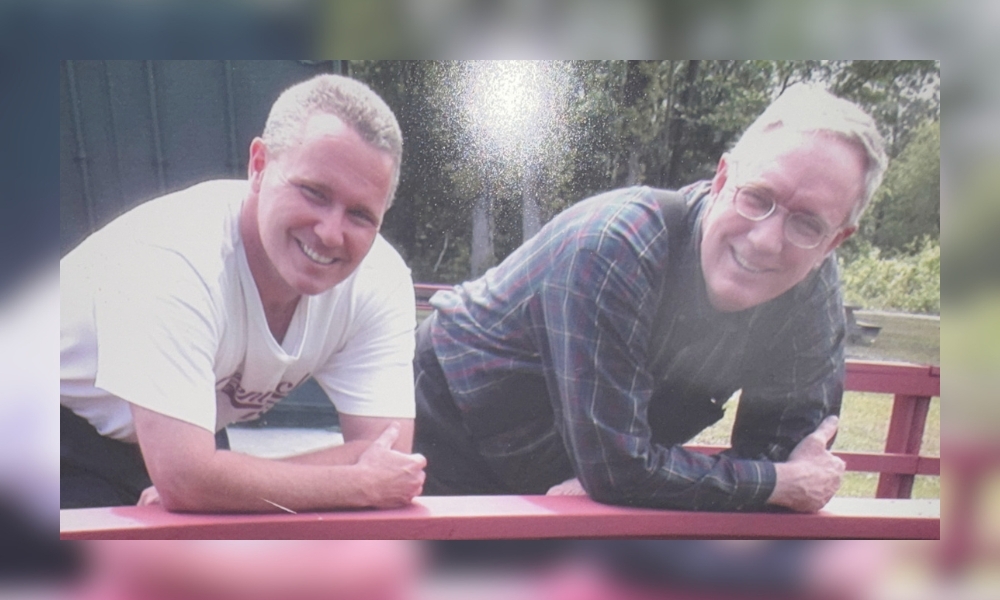
John's brother, Mark Campbell Dickson, offered in 1998 to be tested as a possible donor match, and he discovered that he was — it was the best of times.
John lived for 20 more years with his brother's donated kidney and died in 2018 of an unrelated heart attack.
"The way we came to know love was that [Jesus Christ] laid down his life for us; so we ought to lay down our lives for our brothers" (1 Jn 3:16).
Mark, vice president of mission at Roper-St. Francis in Charleston, recently reflected on his brother's memory during April's annual observance of Donate Life Month and organ donation.
Mark, his late sibling, and I are all linked by circumstances we would rather have avoided — Mark by choice, John and I by necessity.
JOHN
"John was an Air Force veteran who had also served in Vietnam, but had also suffered from various health problems, which were discovered to have worsened over the years," Mark said.
Whether or not he had been exposed to the cancer-causing toxin known as Agent Orange, as many servicemen were, remains unknown.
"By the time John was diagnosed with polycystic kidney disease, however, medications for fighting the condition had improved, as had the anti-rejection drugs needed by every transplant patient, then and now," Mark said.
Polycystic kidney disease is a genetic disorder causing numerous fluid-filled cysts to grow in the kidneys, enlarging them and often leading to kidney failure. Its symptoms include high blood pressure, back or side pain, blood in urine and kidney stones, according to the National Kidney Foundation.
"The worst part of John's ordeal, and our family's, was the waiting period involving screening and other procedures" as John's condition continued a downward spiral toward his having to begin dialysis. "After the doctors concluded that I could live with one kidney," Mark said, "how well it would continue cleaning out the toxins in my body and so on, we proceeded with the transplant, which was performed at Vanderbilt Medical Center in Nashville, Tenn."
Mark said that John was 43 years old "and very blessed to have been able to receive this gift of life — just as I was blessed to give it. He remained in good health all of those years, enjoyed walking his dog and being with his family."
And what has life been like for this living donor? "Very good; as you know yourself, a person can live with one kidney and I have — eating healthier, as you do, and it has helped me to appreciate my own life."
He said that by working with clients for the hospital system and Sharing Hope SC, "I was able to receive some training as a chaplain that helps me train others in how to work with and talk to families who are preparing for organ donation — the passing of someone whose death and sacrifice will mean life for someone else."
He said that chaplaincy and pastoral health care are both important, "because our people belong to a very vulnerable population," those with kidney disease.
Mark's experience as a living donor mirrors, in its own way, the journey of those on the receiving end — including my own. For anyone navigating a similar diagnosis, experts advise seeking placement on the wait lists of more than one hospital transplant program.
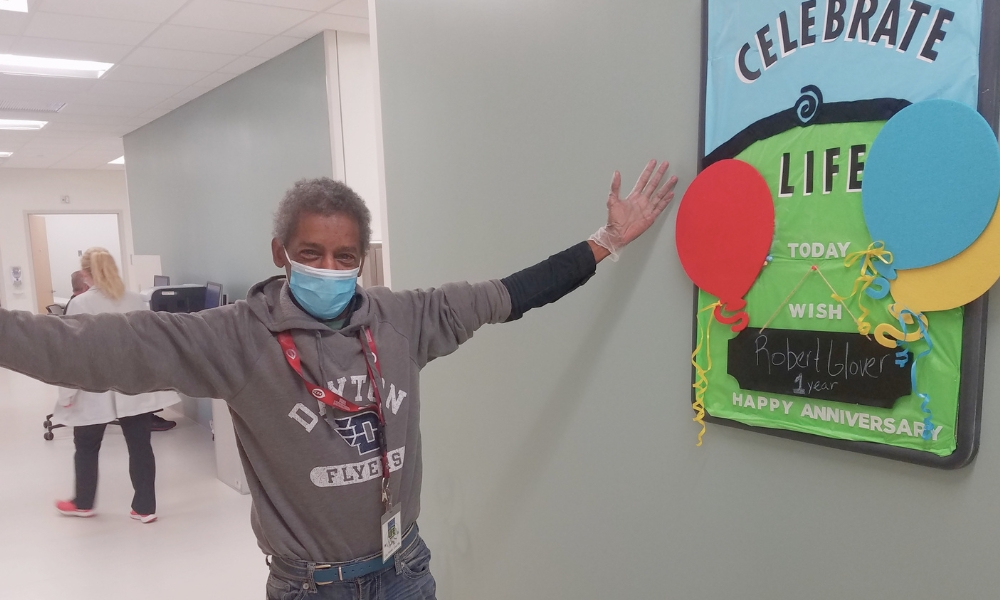
ROBERT ALAN
I took care of myself for two years and 10 months after being diagnosed with "moderate but treatable" kidney failure. Once the decision was made about starting dialysis, I attended a workshop on it and began the torturous experience of vein mapping — for placement of a dialysis graft — and interviews with medical personnel from the University of Kentucky.
Late April 2019 found me interviewing key members of the transplant center from the University of Cincinnati Medical Center, in their Lexington office. With credit earned after some 20 months of dialysis, the team told me, "After placement on our wait list, we can promise you a new kidney within three to four months."
Going on their national wait list happened six months later, which involved repetitive screening but no testing. I was notified on Oct. 15, 2019, while on my dialysis chair. The "three to four months" estimate, however, became just 18 days — the second such "miracle" during my journey, as I came to call this ordeal.
The first one came 15 months into dialysis, after doctors learned that my kidneys had recovered 33% of their function and I did not need dialysis.
My remission lasted two weeks short of a year, ending in late September of 2018. The next year, however, saw no repeat of that miracle, just frustration, and no word from UK. Three hours of dialysis (three days a week) eventually became just two days, but even this progress took eight months to achieve.
My "best of times" began on Nov. 2, 2019, with an 8:30 a.m. call from the University of Cincinnati Medical Center. A 12-member transplant team operated on me for over four hours.
My 90-day quarantine at home ended one month before COVID reached this country. I attended early Christmas Eve Mass wearing gloves and a mask and observing the necessary precautions, and resumed lector duties on Epiphany in 2020.
LIFE GIVING
This is an observance that comes with a sorrowful legacy. Battling renal failure is a fight for life, one that many of my fellow patients in two different dialysis programs lost.
I sat alongside or across from people who were too old to qualify for a transplant — and therefore doomed — or who were too ill with additional maladies which bumped them further down the lists.
Personally, I never feared dying, because I believed that — should my disease win — I would see God. I know nothing about my donor — whose death meant my continued survival — and I never will. I am now in my seventh year of living with a deceased person's donated organ.
REST IN PEACE
During my two periods of dialysis in Lexington, I became friends with Susan, a young woman around 40 beset by diabetes-related kidney failure. I watched her return to the chair after two long absences, each time missing more of her right leg below the knee. She also spent four hours on the machine: equipped with ear buds, music, laptop, books and a remarkably upbeat attitude.
Two years ago, and over four years after my transplant, I dropped by the facility after an orthopedic appointment nearby. The receptionist told me that "we had lost a lot of people," and that "Susan didn't make it."
Our social worker later told me that Susan "became very ill one afternoon and refused pleas by her mother and others to call her doctor." She refused — I think because she was just plain tired of being sick; tired of it all.
Very tired. And so, the next day she died. Rest in Peace, Susan, John Dickson, and all our friends. Welcome home.
Editor's note: The Catholic Miscellany will be running a two-part series on the importance of live organ donation this summer. This article serves as a preview of that series.
Robert Alan Glover is an alumnus of the University of Dayton who writes for The Black Catholic Messenger, The Catholic Miscellany and several other Catholic publications. Email him at martinique1902@yahoo.com.