200 years of faith at Catholic Hill
As one of the five oldest churches in South Carolina, St. James the Greater celebrates 200 years of proving that a successful ministry does not just survive. It serves.
As one of the five oldest churches in South Carolina, St. James the Greater celebrates 200 years of proving that a successful ministry does not just survive. It serves.
Established in 1826, St. James the Greater Mission has seen U.S. and South Carolina history unfold over two centuries. Its first sanctuary was built in 1833 when Irish plantation owners wanted a space to worship along with the people they enslaved. Bishop John England dedicated the space.
Catholic Hill, the nickname given to this settlement outside Walterboro, lost its church when the building was destroyed by a fire in 1856. Even though the community no longer had a physical worship space, it remained steadfast, determined and strong in its dedication to God.
Toward the end of the Civil War, as slavery was abolished, many planters fled their hometowns. With little to no support, a formerly enslaved man, Vincent de Paul Davis, began ministering to the people of St. James. He kept the fire of the Word alive through catechesis, even with no priest or place to worship.
After the community had gathered for nearly 40 years without diocesan support, word of the extant Catholics reached a traveling preacher, Father Daniel Berberich. Father Berberich sought to reestablish the congregation and immediately got to work on a second church building and a schoolhouse. The school offered a quality Catholic education to children in Catholic Hill regardless of religious affiliation. Its mission was to educate Black students who were not yet allowed into the public school system. St. James was deeply involved in every aspect of community life, becoming far more than just a place to worship on Sundays.
Years later, a disastrous tornado struck the area and destroyed the church. The community built its third church, which stands to this day. After operating for almost 60 years and serving over 100 Black students, the schoolhouse closed as public schools began to integrate. The schoolhouse building remains on the campus and is now used as a parish hall.
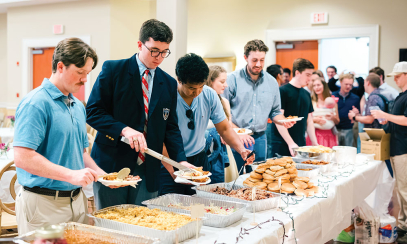
In honor of this momentous occasion, parishioners and community members marked the 200th anniversary with a weekend-long celebration in September.
Father Bruce Barnett, the current pastor, said this anniversary is “a testament not just to the faith, but to the whole community. St. James has contributed so much more than just the church.”
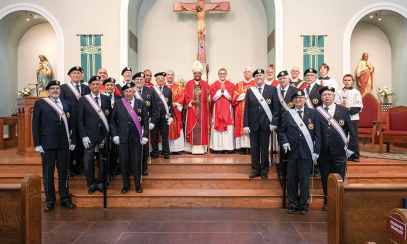
Celebrations included guided historical tours, silent auctions, commemorative items and more. Cardinal Wilton Gregory, archbishop emeritus of Washington, celebrated the Mass alongside Bishop Jacques Fabre-Jeune, CS. Cardinal Gregory, the first African-American cardinal and a former president of the U.S. Conference of Catholic Bishops, delivered the homily.
“These 200 years have witnessed the astounding strength of the Catholic faith. Of your ancestors, during brutally oppressive moments in our history,” he said. “You celebrate today 200 years of success in accomplishing what is simply a miraculous display of God’s grace and your determination to accept and foster your genuine dignity as a child of God.”
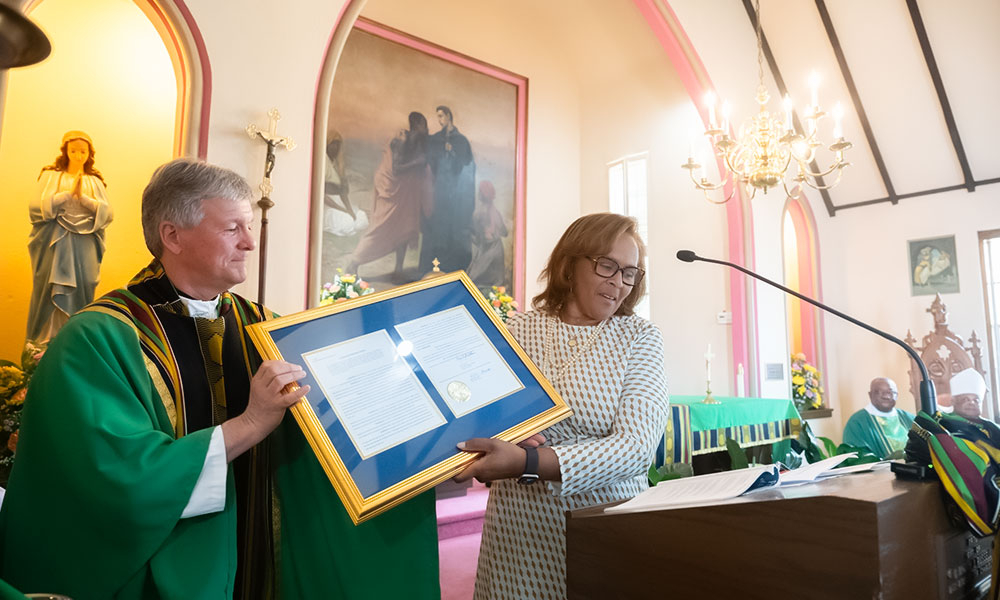
Sunday’s celebrations included a proclamation from Colleton County honoring the anniversary, and a speech by South Carolina state Sen. Margie Bright Matthews, a descendant of St. James the Greater parishioners, who attended the school.
“The history of St. James is so significant. It reminds us that even when freedom was denied, faith could not be taken away,” she said.
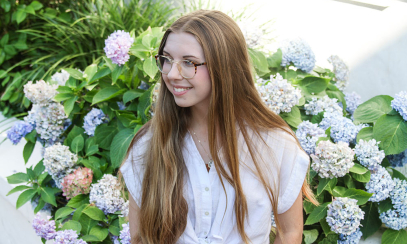
The celebration also drew visitors from far beyond Catholic Hill, including young adults Anna Kopsick and Hunter Doiron, who drove more than 600 miles from Dayton, Ohio, to attend. The two had visited the parish earlier in the summer, when they fell in love with its rich history and community. When they learned of the event, they decided to make the trip.
What drew them, and many others for two centuries, is a spirit built directly into the identity of the unincorporated community. The name Catholic Hill demonstrates the courage and boldness residents have always embodied. In a state where Catholics are a minority, and Black Catholics are an even smaller number, holding on to the faith is ever more vital.
“It took a lot of courage to proclaim your faith and to say that ‘I live on Catholic Hill,’” Father Barnett said.
Olivia Burtis is the diocesan public relations and writing assistant for Communications: oburtis@charlestondiocese.org.