
Unlock your faith with the Catechism to bring Scripture to life
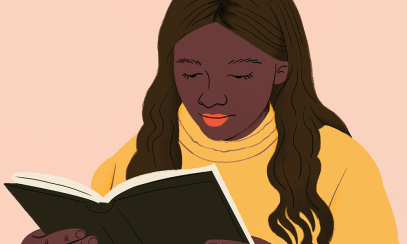
If you’ve ever lived in the southern United States — and I’m guessing you have if you’re reading this — you’ve probably heard an age-old misconception that Catholics don’t read the Bible. I have early recollections of my mother finding tracts left on our windshield during Mass accusing the Catholic Church of forbidding lay people to read Scripture. By middle school, several well-meaning non-Catholic friends had asked me if I had ever read any part of the Bible.
If you’ve ever lived in the southern United States — and I’m guessing you have if you’re reading this — you’ve probably heard an age-old misconception that Catholics don’t read the Bible. I have early recollections of my mother finding tracts left on our windshield during Mass accusing the Catholic Church of forbidding lay people to read Scripture. By middle school, several well-meaning non-Catholic friends had asked me if I had ever read any part of the Bible.
There are a lot of excellent explanations why it is not true that Catholics are told not to read the Bible, and, if you feel ill-equipped to explain this yourself, I’d encourage you to check out apologetics resources like catholic.com.
However, in keeping with this year’s deep-dive into catechesis, especially in the Catechism of the Catholic Church, this month I’d like to share how the Catechism can especially enhance our study of sacred Scripture. Not only do we read sacred Scripture every time the Mass is celebrated, the Catechism is an excellent companion when we want to read more.
Paragraph 89 states that “there is an organic connection between our spiritual life and the dogmas …” with the next paragraph continuing that “the mutual connections between dogmas, and their coherence, can be found in the whole of Revelation of the mystery of Christ …” Simply stated, sacred Scripture (the Bible) and what is taught by the Catholic Church are always in agreement and support of each other.
This can be seen in a very real way in the layout of the Catechism. Earlier this year, I highlighted how the numbers seen in the margins of the Catechism can direct us to other places in the text that explain the same topics. Similarly, the Catechism cites Scripture in footnotes throughout the text, and these references can enhance our study of sacred Scripture.
But wait — there’s more!
While not all editions have all this, most catechisms feature two indexes. There’s the topical index organized alphabetically by keyword that one would expect to find in any text. But then the Catechism also features an index of citations, beginning with sacred Scripture. This means that in addition to looking at the footnotes, readers can also start with the Scripture citation and then flip to the relevant catechetical paragraphs.
For example, if you are picking up the Bible and open to Genesis 1:1 and want to know where this passage is cited in the Catechism, all you need to do is flip to the Index of Citations. Books of the Bible are listed in order and the first citation lists Genesis 1:1-2:4 (on the left), which is cited in paragraph 337 (on the right). This paragraph explains the visible world created by God in the profession of faith.
A second citation lists the four times Genesis 1:1 is cited: in paragraphs 268, 279, 280 and 290. These are also cited under the profession of faith, although these reference the attributes of God we profess in the Creed.
Some books of the Bible have several pages of citations. It’s probably no surprise that Matthew, Mark, Luke and John get quite a bit of press. Others may only have one or two references. However, knowing that the Index of Citations exists, and how to use it, has helped me countless times over the years to connect what I believe to what sacred Scripture teaches.
Our faith is connected! What we study in the Catechism is thoroughly supported by sacred Scripture. Knowing how to use the footnotes and the Index of Citations can help us recognize just how dynamic the Catechism is as a reference. We are empowered to see how Scripture and Tradition are connected.
Learn more
You can read and search the Catechism online for free at usccb.org/catechism-of-the-catholic-church in a handy flipbook, or in several languages at vatican.va/archive/ccc/index.htm.
Alison Blanchet, LMHC, lives in Panama City, Florida, with her husband and three children. She works as a therapist for children and teens. Email her at alisondblanchet@gmail.com.