
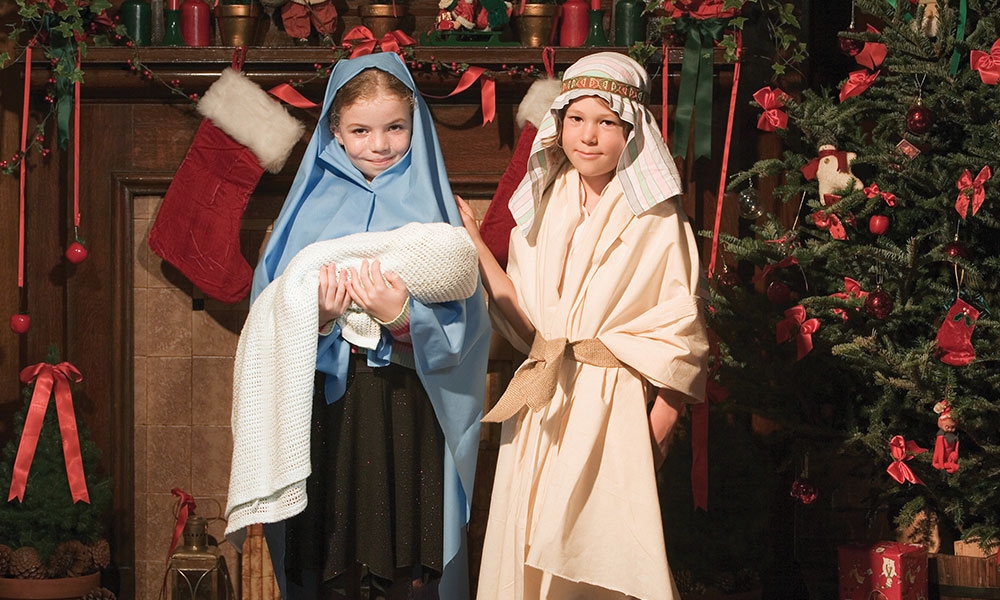
Seeing Christmas better through the eyes of the “wrong” family
The Best Christmas Pageant Ever, published in 1972 by Barbara Robinson, is one of my favorite books from elementary school. It follows the story of the six Herdman children, a group of unruly siblings who wander into church for the first time because they heard the snacks were good. They end up with lead roles in the church’s Christmas pageant after threatening the children who usually play Mary and Joseph with dire (and absurd) consequences, like planting pussy willows in their ears.
The Best Christmas Pageant Ever, published in 1972 by Barbara Robinson, is one of my favorite books from elementary school. It follows the story of the six Herdman children, a group of unruly siblings who wander into church for the first time because they heard the snacks were good. They end up with lead roles in the church’s Christmas pageant after threatening the children who usually play Mary and Joseph with dire (and absurd) consequences, like planting pussy willows in their ears.
The Herdmans’ casting causes an uproar in the church and town. With few exceptions, the community believes that this particular family doesn’t belong in church and definitely has no place telling the story of the birth of Christ.
As the tale progresses, it comes to light that the Herdmans have no knowledge of the story of Christmas. In one especially animated chapter, the pageant director attempts to tell the story of the birth of Christ to the family, who grow increasingly appalled at how the world receives their Savior. Hearing that there was no room for the Holy Family anywhere besides a stable, the Herdmans were astonished that Child Protective Services failed to intervene.
Then they are hopeful that the three kings will “tell off” the innkeeper and “get the baby out of the barn.” Instead, they are dismayed by the Magi’s gifts of gold, frankincense and myrrh, which they thought were impractical. While the gifts had important prophetic significance, the Herdmans were more concerned with how the Holy Family was going to eat that day.
Without giving too many spoilers, the raw astonishment of the poverty and simplicity of Christ’s birth lead the Herdman kids and the whole community to conversion as the story of the birth of Christ is played by a family experiencing significant adversity.
I highly recommend reading or watching it — it’s an excellent play and movie — if you haven’t read it since third grade, or missed it entirely in your younger years. It will enrich your Advent and Christmas.
While most of us are more familiar with the story of Christmas than the Herdmans were, we can still grow numb or forget the reality that Christ is in our midst. This Advent and Christmas season we don’t need to look far for examples of our brothers and sisters who, like the Holy Family, are in dire need of care. In a letter written on Oct. 14, 2025, Bishop William Wack, CSC (Diocese of Pensacola–Tallahassee) extolled the faithful, “We are all brothers and sisters, one family under God, and our faith demands that we move beyond fear and indifference to encounter those on the margins with compassion and mercy.”
After watching the Herdmans learn the story of Christmas, a child in The Best Christmas Pageant Ever reflects that many of the the serene pictures of Christmas that they had seen didn’t accurately reflect the poverty of Mary and Joseph or the threat posed by Herod that caused the Holy Family to have to flee their home country. Slowly, through the Herdmans’ eyes, everyone sees that the Holy Family was poor and were refugees. The town realizes that the Herdmans and the Holy Family had more in common than they initially thought.
The season of Advent and Christmas invites us to remember Christ’s birth and keep in mind that he will one day return. Our preparation for our ultimate reunion with him is paramount and should inform how we treat one another. Matthew 25:40 describes this clearly when Christ proclaims, “Amen, I say to you, whatever you did for one of these least brothers of mine, you did for me.”
In The Best Christmas Pageant Ever, the Herdmans were scandalized by how Christ was welcomed 2,000 years ago. As 2025 concludes, we all have an opportunity to examine how we have welcomed Christ, each day, in the disguise of our brothers and sisters — especially those most in need of compassion and mercy.
We can all ask the question posed in Matthew 25:44, “Lord, when did we see you hungry or thirsty or a stranger or naked or ill or in prison, and not minister to your needs?” The care we give to all — especially those in need, or strangers among us — is the care we give to Christ.
Alison Blanchet, LMHC, lives in Panama City, Florida, with her husband and three children. She works as a therapist for children and teens. Email her at alisondblanchet@gmail.com.