Saints galore, American-style
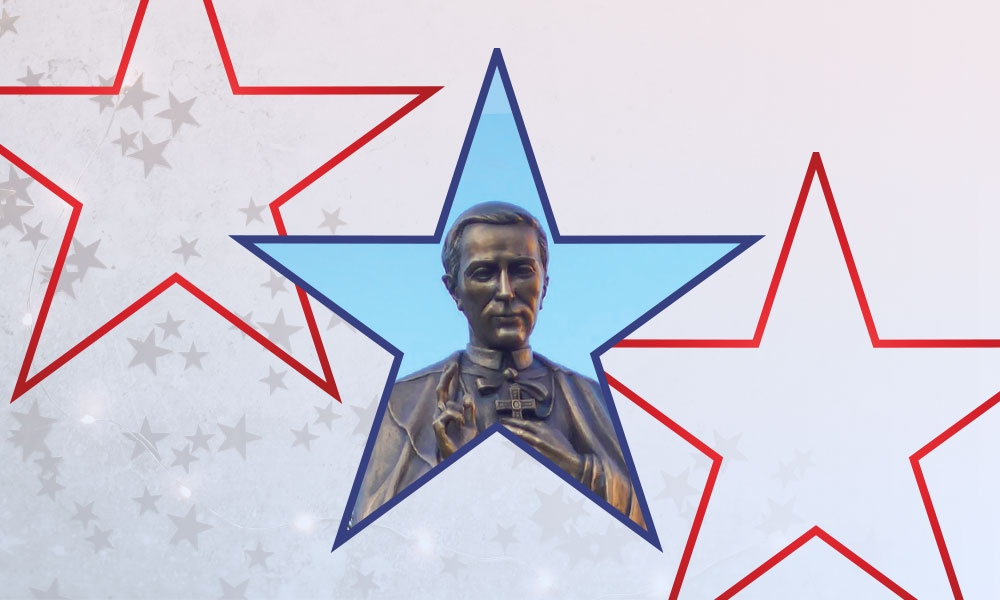
Identifying the year as 2026 is gradually wending its way into our consciousness. With the New Year, we are propelled into the calendar of American saints. Starting with St. Elizabeth Ann Seton on Jan. 4 and St. John Neumann on Jan. 5, we will find an amazing array of Americans memorialized throughout the year.
Identifying the year as 2026 is gradually wending its way into our consciousness. With the New Year, we are propelled into the calendar of American saints. Starting with St. Elizabeth Ann Seton on Jan. 4 and St. John Neumann on Jan. 5, we will find an amazing array of Americans memorialized throughout the year.
One thing these canonized and currently beatified Americans have in common is the nation with which they are identified. First and foremost, of course, is their record of personal holiness and heroic virtue. Aside from that, there is, frankly, little our American saints and blesseds have in common.
As of this writing, there are 16 of them — 17, if you count Father Damien de Veuster of Molokai, who was in Hawaii when it was still a colony. St. Kateri Tekakwitha, the Lily of the Mohawks, was Native American. Blessed Carlos “Charlie” Rodriguez Santiago was a layman from Caguas, Puerto Rico, devoted to catechesis and voluntary poverty.
Several established religious communities. Mother Seton was a widow and mother before she founded the Daughters of Charity and pioneered Catholic education. One who is legendary in Detroit was Father Solanus Casey, a Wisconsin farm boy who became a Capuchin friar caring for the poor and sick. Another farm boy from Oklahoma, Blessed Stanley Rother, became a missionary to Guatemala and was martyred there. Blessed Father Michael McGivney founded the Knights of Columbus. Mother Cabrini’s passion for caring for poor immigrants has been immortalized in places across New York, Philadelphia and Chicago.
Variety is even more evident among current candidates for sainthood. Along with St. Kateri, we now have Servant of God Nicholas Black Elk, another Native American who survived the Wounded Knee massacre and spent years as a catechist. Servant of God Julia Greeley, a former slave and domestic worker, became known as the “angel of Denver” for her secret charitable work. Venerable Archbishop Fulton J. Sheen graced radio’s Catholic Hour for decades and had a weekly television program.
Servant of God Michelle Duppong, who died at age 31, was a FOCUS missionary and formation director. Servant of God Dorothy Day, a former communist who had an abortion as a young adult, converted to Catholicism and co-founded the Catholic Worker movement, championing the rights of the poor and advocating for peace well into her 80s. Venerable Pierre Toussaint was a former slave who became a wealthy New York hairdresser and devout benefactor.
Another striking characteristic: many of these American saints were immigrants. St. John Neumann, bishop of Philadelphia who founded the first diocesan Catholic school system, came from Bohemia. Sister Marianne Cope, who served in Molokai, was born in Germany, as was Blessed Francis Xavier Seelos. St. Junipero Serra came from Spain. Mother Theodore Guerin was born in France. St. Isaac Jogues, St. René Goupil and the other North American martyrs were also French-born missionaries. Like Philadelphia heiress St. Katharine Drexel, St. Rose Philippine Duchesne was drawn to mission work among Native Americans and was also French-born. St. Frances Xavier Cabrini came from Italy.
Among the Venerables and Servants of God, two African Americans — Pierre Toussaint and Mother Mary Lange, founder of the Oblate Sisters of Providence, whose order served in the Diocese of Charleston for decades — were immigrants from Haiti and Cuba respectively. Another Cuban-born American is Venerable Father Felix Varela; Venerable Mother Mary Angeline Teresa McCrory came from Ireland; Venerable Mother Maria Kaupas, founder of the Sisters of St. Casimir, was from Lithuania; Venerable Mary Theresa Dudzik came from Poland; Venerable Bishop Frederic Baraga, first bishop of Sault Sainte Marie and Marquette in Michigan, came from Slovenia.
And, we haven’t even mentioned those whose parents were immigrants, like Blessed Father Michael McGivney and Blessed Solanus Casey (Irish parents) or Blessed Miriam Teresa Demjanovich (parents from eastern Slovakia).
Among our uncanonized, lesser-known saints — the ones we remember on All Saints’ Day — are people who were janitors and homemakers, nurses and EMTs, grocers and seamstresses, secretaries and lawyers, auto mechanics and coal miners and kindergarten teachers. We will know them one day, though for now, their heroic virtue lives on anonymously in the souls they touched. Like many of our saints and candidates for sainthood, they came from humble beginnings. Many came to America from other lands, because this country is, and is meant to be, a beacon of opportunity: a land where people can worship and live their faith freely, and where the stranger is welcomed and can flourish.
One of the wonders of our Church — and foremost among its blessings — is its catholicity with a little “c.” Catholicity, or universality, characterizes our calendar of saints. And that is what we must recognize and believe the United States of America, a nation of immigrants, is about too.
Sister Pamela Smith, SSCM, Ph.D., is the diocesan director of Ecumenical and Interreligious Affairs. Email her at psmith@charlestondiocese.org.