
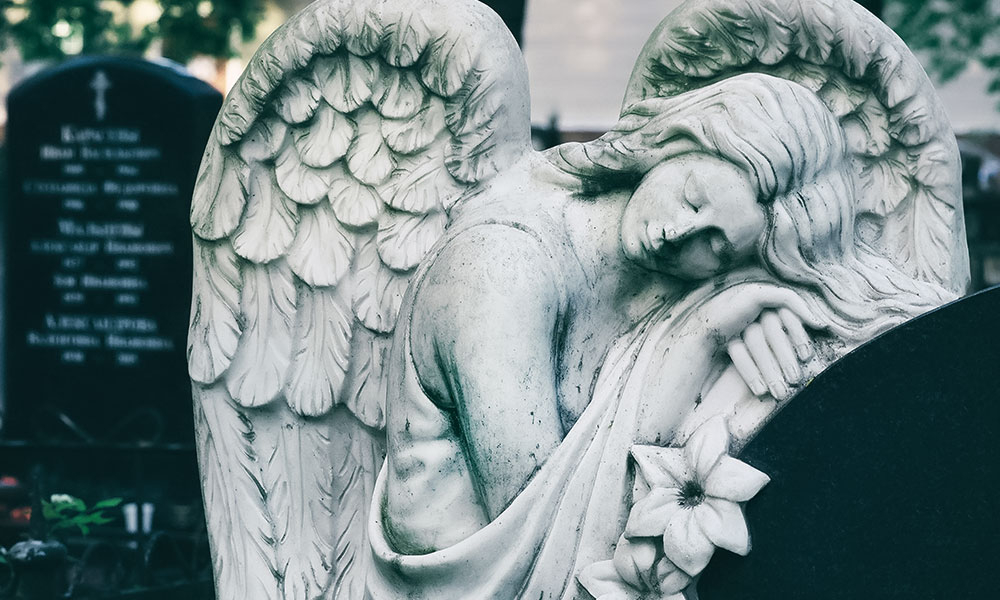
How to live in this life for eternity
November is traditionally a time for Catholics to dedicate reflection and prayer for loved ones who have passed away and to pray for the holy souls in purgatory. Although we hope for their eternal destination, there is an ancient meditation, going back centuries in the Church, where we also reflect and pray on our salvation for eternity.
November is traditionally a time for Catholics to dedicate reflection and prayer for loved ones who have passed away and to pray for the holy souls in purgatory. Although we hope for their eternal destination, there is an ancient meditation, going back centuries in the Church, where we also reflect and pray on our salvation for eternity.
This ancient practice is called memento mori, Latin for “Remember your death,” or “Remember that you have to die.” It is a Catholic spiritual practice of meditating on the unavoidability of death. It is not meant to be melancholic, but rather a joyful and motivating tool for detaching from worldly distractions, avoiding sin and living a more virtuous life focused on heaven.
Throughout the centuries, the practice of memento mori has been associated with symbols and sayings that were particularly popular in the medieval Church. However, its real beginning is found in Scripture, in Genesis, after the first sin of Adam and Eve, when God reminded them — with a verse often used during Lent on Ash Wednesday: “For you are dust, and to dust you shall return” (3:19).
In Psalms, the psalmist prays, “Teach us to count our days aright, that we may gain wisdom of heart” (90:12). The Book of Sirach also urges, “In whatever you do, remember your last days, and you will never sin” (7:36). In the New Testament, Jesus encouraged his disciples to pick up their crosses daily and to remember their death as they follow him to the Place of the Skull (in Hebrew, Golgotha). Jesus said, “If anyone wishes to come after me, he must deny himself and take up his cross daily and follow me” (Lk 9:23).
There are three purposes of practicing memento mori:
- spiritual clarity, by keeping our destination in mind, with the anxieties and material concerns of daily life fading in importance;
- growth in virtue, since thinking about our final judgment helps root out sin and avoid self-satisfaction; and
- the “Good Death,” by preparing for the end, memento mori allows us to approach our final moments of life with peace rather than fear.
There are also a few ways Catholics can meditate on their death, such as having visual reminders — keeping a noticeable skull or a funeral crucifix on a desk or table — as a daily reminder and a tool for prayer. Another technique Catholics can use to remember their death is the Examen, which combines reflection on one’s mortality into daily night prayers.
The saints constantly spoke of the importance of meditating on the unavoidable fact of death. This appeal was not born of some chilling obsession or gloomy fascination, but from the belief that the thought of death helped them live better lives and remain focused on eternal life.
One of our most beloved saints in the Catholic Church is St. Joseph, patron of a happy death. His death is considered idyllic because, according to tradition, he died peacefully in the presence of Jesus and Mary.
St. Jerome, patron of librarians and biblical scholars, is often depicted in classical religious art seated at his desk with a human skull positioned prominently nearby. He used this visual reminder to anticipate the temporary nature of worldly knowledge.
Women saints are also linked to memento mori as iconic figures. They, too, have meditated on human mortality to deepen their faith. One of the most popular is St. Mary Magdalene, patroness of converts, repentant sinners, women and a reflective life. She is often portrayed in Renaissance art holding a skull or kneeling before one for her deep repentance and contemplative conversion.
St. Catherine of Siena, patroness of nurses, against fire, and people who are ridiculed for their piety, was a famous Dominican mystic who frequently meditated on the soul’s fragility. She is sometimes shown in art holding a skull, reflecting her deep observations of death and divine love.
St. Elizabeth of Hungary, patroness of hospitals, of falsely accused people, widows and countesses, was a medieval symbol of radical charity. She was known for her humility and contemplation of human mortality.
In the modern era, Sister Theresa Aletheia Noble is a contemporary nun and author who promotes daily meditation on mortality by bringing the practice to modern followers.
Finally, there are benefits to reflecting on our death and mortality:
TIME: Time is a precious resource. It is a moment once possessed that can never be recaptured. What we do with our time will last for eternity. Time is also extremely limited in quantity, and we do not know exactly how much we have. These considerations should motivate us to use our time wisely and not waste it. We must enjoy our God-given life, but true wisdom does not seek a life of pleasure at the expense of our souls.
HOLY FEAR: This benefit is taken from Matthew, for we will all be judged on our works (25:31-46). Many like to claim the name of Catholic or Christian. We are not saved by faith alone. The Scriptures say we will be judged by what we did. In other words, live well so that we can do well. Wherever possible, reconciliation before we meet our end is something to strive for in our relationships that may be broken.
SAINTHOOD: Life is short. Eternity is long. We are capable of extraordinary things by God’s grace, and the call to holiness is a call to a supernatural life — not necessarily performing miracles or levitating — by knowing God and participating in his divine nature as far as is possible for a creature. Therefore, be a saint.
This month, let’s remember that a good death does not just happen. We must prepare.
Sarah Holston is a freelance writer and a parishioner of Our Lady of Perpetual Help Church in Camden: sarahholston06@gmail.com.