Forecast: Uncertain, with a chance of trust
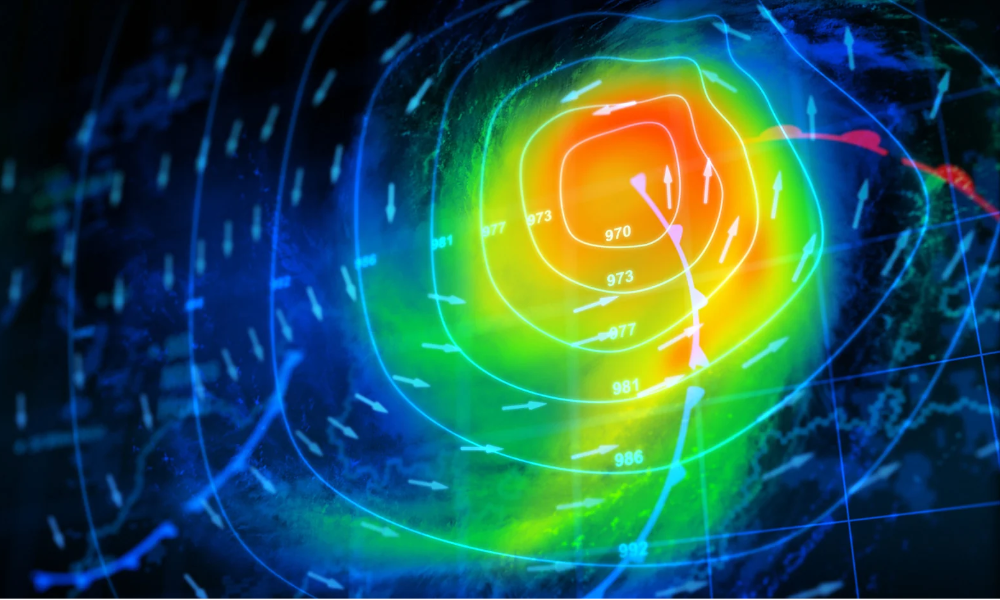
As the days get shorter and winter creeps ever closer, I have been engaging in one of my most fruitless annual rituals: scouring winter weather predictions for my part of the world.
As the days get shorter and winter creeps ever closer, I have been engaging in one of my most fruitless annual rituals: scouring winter weather predictions for my part of the world.
Ever a pragmatist, I want to know how many snow days to build into my syllabus. I want to know how to budget for my fuel bill. I want to know how much to hedge my bets when making travel plans.
So, I eagerly read the news reports that tell me what the Farmers’ Almanac predicts. What the Old Farmers’ Almanac predicts. What the National Weather Service predicts. What any given panel of random local meteorologists predicts. What the optimists predict. What the pessimists predict. They all speak with such confidence that I tell myself they must know something certain.
The problems, of course, are that they disagree, and they disagree in a technical language that is not my own. As I read or listen to all their predictions, peppered with grim talk of El Niños, super El Niños, La Niñas, nor’easters, polar vortexes and storm tracks, I end up less certain about what will come than I was before I began.
Maybe that is as it should be.
So often in life, planners like me want to know exactly what to expect. We want to know what is coming, and we want to plan with good information about what lies around the bend. Uncertainty is unnerving, while certainty seems helpfully comforting — in life as in weather.
Yet, regardless of what the winter may hold, there are certain simple things I just know I should do. I should expect that some cold, ice and snow will come. I should check to see that my furnace is working. I should put aside money for the gas bills that will always be higher than I expect. I should keep boots and a shovel handy. I should always plan contingencies for classes and for travel and expect that they will not always go as planned.
How much would worrying about detailed predictions really change any of these simple tasks of preparation?
Life is like this too. While I think I want more certainty about what is to come so I can plan, in this realm, as with winter, there are certain simple things that I know I should do. To love God and neighbor, to take the Beatitudes to heart, to share in the sacramental life of the Church, and to be generous with time, talent and treasure are all part of a good life that does not require knowing the specific ways in which life may unfold for me or for those I hold dear.
How much would worrying about what the future holds change any of these simple tasks of preparation? Would any of these ancient and holy guides for life change?
Maybe it is a good thing that there is no way to anticipate winter’s weather with certainty. It is a reminder that life, too, holds its unknows — and that these unknowns should not change the core of how life is to be lived. It is a reminder to trust in the God who promised, “Do not worry about tomorrow; tomorrow will take care of itself” (Mt 6:34).
And, maybe, it is a gentle reminder to stop seeking predictions about both wintry weather and ordinary time.
Lucia A. Silecchia is a professor of law and associate dean for faculty research at The Catholic University of America. Email her at silecchia@cua.edu.